
Thomas Wiggins (1849-1908)
About the Composer
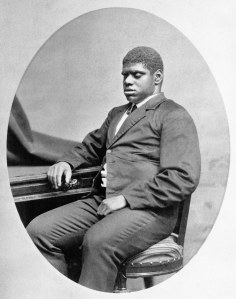
Thomas Wiggins (1849–1908), widely known during his lifetime as “Blind Tom,” was one of the most extraordinary musical figures of nineteenth-century America. Born into slavery in Georgia, he was blind from birth and displayed astonishing musical abilities as a young child, reportedly able to reproduce complex pieces after hearing them only once. Although denied the freedom to direct his own career, he became an internationally celebrated pianist and composer, performing hundreds of concerts across the United States and Europe and astounding audiences with his remarkable memory, improvisational gifts, and technical command of the piano.
Alongside his career as a performer, Wiggins composed dozens of original works that reveal a creative imagination extending far beyond the feats for which he became famous. His music ranges from virtuosic concert pieces to lyrical character sketches, often drawing inspiration from the sounds of everyday life and the natural world. While his performances were frequently marketed as spectacles, his compositions demonstrate a distinctive musical voice that deserves recognition on its own artistic merits.
Today, Wiggins is increasingly recognized not only as a remarkable musical prodigy but also as an important American composer whose achievements unfolded under profoundly unjust circumstances. His life invites reflection on questions of freedom, disability, exploitation, and artistic agency, while his music continues to reward listeners with its originality, imagination, and expressive warmth.
About the Piece
Water in the Moonlight is among Thomas Wiggins’s most lyrical piano works. Written in 1866, its gently lilting waltz rhythm, flowing accompaniment, and singing melody create an atmosphere of quiet reflection and warmth.
Rather than contrasting separate themes, Wiggins builds the piece through a series of imaginative transformations. Each new section enlarges the musical ideas introduced quietly at the opening: first broadening them into a more radiant and expansive statement, then enriching them with increased chromaticism and virtuosic writing before culminating in a triumphant conclusion. The result is a work whose emotional arc grows naturally from quiet contemplation to joyful affirmation.
More than 150 years after it was composed, Water in the Moonlight offers a compelling glimpse of Wiggins’s voice as a composer. Rich in melody, imagination, and expressive range, it is a work of lasting artistic merit that continues to reward performers and listeners alike.
Explore Further
- A Circus Act No Longer: Thomas “Blind Tom” Wiggins (Melanated Moments in Classical Music podcast)
- Tracing the Story of Tom Wiggins, the Celebrated Pianist, Using Historical Newspapers (Library of Congress Blogs)
- Thomas “Blind Tom” Wiggins (New Georgia Encyclopedia)
Sheet Music
The sheet music for this public-domain work is available on IMSLP.

