Conlon Nancarrow (1912-1997)
About the Composer
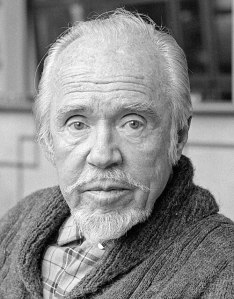
Conlon Nancarrow (1912–1997) was an American-born composer whose relentless curiosity transformed the possibilities of twentieth-century music. Although he is best known for his groundbreaking studies for player piano, his career reflected a lifelong fascination with rhythm, musical structure, and the limits of human performance. Today, he is widely regarded as one of the most original musical thinkers of the twentieth century.
Born in Arkansas, Nancarrow studied composition in Cincinnati, Boston, and briefly with Nicolas Slonimsky before serving in the Abraham Lincoln Brigade during the Spanish Civil War. Because of his participation in the Abraham Lincoln Brigade and his Communist Party membership, he encountered political obstacles upon returning to the United States and eventually settled in Mexico City, where he spent most of the remainder of his life. Working largely in isolation, he developed a highly individual musical language that attracted international recognition only later in his career.
Although the extraordinary complexity of Nancarrow’s player piano studies has come to define his reputation, his musical interests extended far beyond the technological and compositional experiments for which he became famous. Jazz, blues, and popular music remained important influences throughout his life, and even his most experimental works reveal an unmistakable sense of rhythmic vitality.
About the Piece
Blues was composed in 1938, long before Nancarrow became internationally known for his groundbreaking studies for player piano. Even at this early stage of his career, the piece reveals the composer’s fascination with rhythm and his lifelong affection for jazz and blues. Having played trumpet in jazz bands during his youth, Nancarrow understood these musical traditions from the inside. Rather than treating jazz and classical music as separate worlds, he allows them to coexist, creating a work that is at once unmistakably American and strikingly modernist.
Built upon the rhythmic vitality and expressive character of the blues, the music continually stretches listeners’ expectations through unexpected harmonies, bold dissonances, syncopated accents, and dramatic shifts of dynamics. While the work hints at the angularity of twentieth-century modernism, it never loses its connection to the underlying pulse, flexibility, and expressive spirit of the blues. The result is music that feels both adventurous and deeply grounded.
Blues is written with remarkable clarity and purpose. Every accent, dynamic marking, and rhythmic gesture contributes to the larger musical structure, rewarding performers who embrace the composer’s meticulous attention to detail. The piece offers a compelling glimpse of the musical imagination that would later transform twentieth-century composition, while reminding us that Nancarrow’s most radical innovations remained firmly connected to the vitality of America’s vernacular musical traditions.
Explore Further
Sheet Music
The sheet music for this public-domain work is available from IMSLP.

