
from “The Yankee Welcome to Boz: Two Waltzes”
Anthony Philip Heinrich (1781–1861)
About the Composer
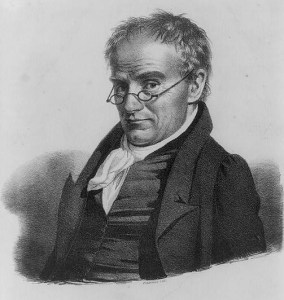
Anthony Philip Heinrich (1781–1861) was one of the earliest composers to develop a distinctly American musical voice. Born in what is now the Czech Republic, he immigrated to the United States in the early nineteenth century and ultimately embraced his adopted homeland as the primary source of his artistic inspiration. At a time when most American composers still looked to Europe for their musical models, Heinrich sought to create music that reflected the landscapes and spirit of the young nation.
After a successful business career ended in financial ruin, Heinrich settled for a time in the forests of Kentucky, where the natural world profoundly shaped his imagination. Largely self-taught as a composer, he developed an intensely personal musical language filled with bold harmonies, vivid descriptive titles, and an almost boundless sense of creativity. His music frequently celebrated American scenery, birdsong, and the experience of life on the frontier, reflecting his fascination with the distinctive character of his adopted country.
Beyond his own compositions, Heinrich played an important role in establishing concert music in the United States. He championed the works of composers such as Beethoven through conducting and public performance, helped foster a growing culture of orchestral music, and presided over the first meeting of what would become the New York Philharmonic Society. Today, he is remembered not only as one of America’s first truly original composers, but also as a musician whose vision helped shape the nation’s emerging musical life.
About the Piece
The Cosmopolitan Waltz was published in 1842 as part of The Yankee Welcome to Boz, a pair of waltzes dedicated to the celebrated English author Charles Dickens and his wife during their widely anticipated visit to New York. Dickens—known to many readers by his pen name “Boz”—was greeted with extraordinary enthusiasm throughout the United States, and Heinrich’s music reflects the excitement surrounding one of the young nation’s most famous international visitors.
Although conceived as a tribute to a literary figure, The Cosmopolitan Waltz is much more than an occasional piece. It is the work of a composer of remarkable imagination whose music is by turns elegant, witty, and delightfully quirky. Heinrich’s detailed performance markings for dynamics, articulation, and pedaling reveal a composer with a clear vision for every nuance of expression, while an unexpectedly adventurous key change momentarily transforms the musical landscape before the waltz returns to familiar ground.
The title itself seems especially fitting. Heinrich, himself an immigrant who embraced the United States as his artistic home, welcomed Dickens not only as a celebrated author but as a fellow traveler in an increasingly interconnected cultural world. The result is a work that reflects both the elegance of the nineteenth-century waltz and the individuality of one of America’s earliest musical voices.
Explore Further
- Anthony Philip Heinrich (Song of America)
- Anthony Philip Heinrich: An Early American Composer in Polk’s America
Sheet Music
The sheet music for this public-domain work is available from IMSLP.

