
from Three Tone-Pictures, Op. 5
Charles Tomlinson Griffes (1884-1920)
About the Composer
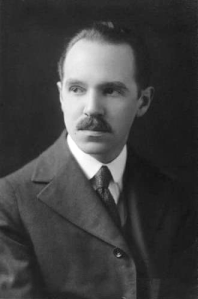
Charles Tomlinson Griffes (1884–1920) was one of the most original and influential American composers of the early twentieth century. Although his life was cut tragically short at the age of thirty-five, he produced a body of work that helped expand the expressive possibilities of American concert music and established him as a leading figure in the development of musical modernism in the United States.
Born in Elmira, New York, Griffes studied in Berlin before returning to America, where he spent much of his career teaching piano and music at the Hackley School in Tarrytown, New York. His early works reflect the influence of German Romanticism, but he gradually developed a highly personal musical language shaped by French impressionism, symbolism, and a fascination with color, atmosphere, and exotic subjects.
Griffes’s music is distinguished by its rich harmonic palette, imaginative textures, and evocative imagery. Whether drawing inspiration from literature, nature, or distant cultures, he sought to create music that suggested moods and impressions rather than explicit narratives. Recent scholarship has also highlighted Griffes’s identity as a gay man, adding another dimension to our understanding of his music and artistic life. His promising career was cut short when he died during the influenza pandemic of 1918–20, yet his music remains an important contribution to American musical history and continues to captivate listeners through its beauty and originality.
About the Piece
The Lake at Evening is the first piece in Griffes’s Three Tone-Pictures, composed between 1910 and 1912. The score is prefaced by a brief excerpt from W. B. Yeats’s poem The Lake Isle of Innisfree: “…for always I hear lake water lapping with low sounds by the shore….” Like the poem that inspired it, the music evokes a moment of quiet reflection rather than a specific narrative. The work stands among the finest examples of American musical impressionism, a style that sought to evoke images and sensations through harmony, texture, and color.
A gently undulating figure flows almost continuously beneath the musical surface, clearly suggestive of water lapping against a shoreline. Above it, Griffes layers harmonies that shimmer between clarity and ambiguity, creating a sound world that feels both tranquil and elusive. Nearly the entire piece unfolds in hushed dynamics, making a single brief climax all the more striking. Whether it represents a surge of emotion, a sudden vision, or simply a change in light across the water, the moment arrives with startling intensity before quickly receding back into stillness.
Although concise in length, The Lake at Evening demonstrates Griffes’s remarkable ability to create a compelling musical experience from a small amount of material. Through subtle shifts of harmony, texture, and dynamics, he transforms a simple poetic image into music of lasting beauty and wonder.
Explore Further
Sheet Music
This public domain work is freely available via IMSLP.

