
Ruth Crawford Seeger (1901-1953)
About the Composer
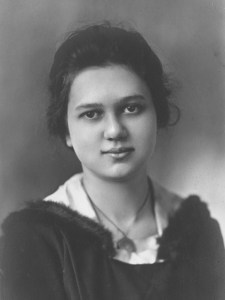
Ruth Crawford Seeger (1901–1953) was one of the most original and innovative American composers of the twentieth century. A leading figure in the group of composers often known as the American ultramodernists, she developed a highly individual musical language characterized by unusual approaches to melody, rhythm, texture, and form. Her work challenged many of the conventions of Western classical music and helped expand the possibilities of musical expression in the decades before World War II.
Born in Ohio and raised in Florida, Crawford initially studied piano before turning her attention to composition. During the 1920s and early 1930s, she became part of a vibrant circle of experimental composers that included Henry Cowell, Carl Ruggles, and Charles Seeger, whom she later married. In 1930, she became the first woman to receive a Guggenheim Fellowship in composition, a milestone that reflected the growing recognition of her extraordinary talent.
Although her compositional output was relatively small, Crawford’s influence has been profound. Following her marriage, she devoted much of her energy to the collection, preservation, and publication of American folk music, collaborating extensively with musicologist John and Alan Lomax. Today, she is celebrated both as a pioneering modernist composer and as an important figure in the preservation of American musical traditions. Her music continues to inspire performers and composers through its originality, intellectual rigor, and expressive power.
About the Piece
Prelude No. 6 comes from Crawford Seeger’s collection of Nine Preludes for Piano, composed between 1924 and 1928. Written during a period of extraordinary artistic growth, the set traces the emergence of one of America’s most original musical voices. Although these works are often associated with the experimental spirit of American ultramodernism, they also reveal Crawford Seeger’s remarkable sensitivity to line, texture, and expressive pacing.
The Prelude is built from multiple independent musical voices unfolding simultaneously across the full range of the keyboard. While its harmonic language embraces strong dissonance, the music is far from static or abstract. Instead, the individual lines gradually intertwine to form long, expressive phrases, creating a constantly shifting tapestry of sound. Crawford Seeger’s economical use of material allows an astonishing variety of textures to emerge from a remarkably unified musical language.
For the performer, the challenge lies not only in coordinating the independent voices but in shaping the work’s broad expressive arc. Long crescendos and subtle changes of texture require sustained concentration, revealing a music that unfolds patiently over time. More than a century after it was written, Prelude No. 6 continues to reward careful listening, demonstrating how emotional depth can arise from music of extraordinary structural clarity and imagination.
Explore Further
- Ruth Crawford Seeger biography and resources (Peggy Seeger official site)
- Ruth Crawford Seeger: Musical Ultra-Modernist and Folklorist (Los Angeles Public Library)
- The Experimentation of Ruth Crawford Seeger (Library of Congress talk/performance video)
Sheet Music
This public domain score is freely available via IMSLP.

