from Five Sketches in Sepia
Ernest Bloch (1880-1959)
About the Composer
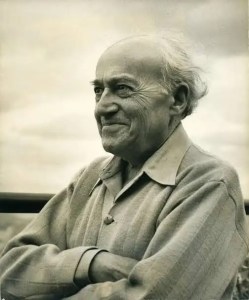
Ernest Bloch (1880–1959) was a Swiss-born American composer whose music occupies a distinctive place in twentieth-century musical history. Although he is often associated with works inspired by Jewish themes and spirituality, his output encompassed a wide range of styles, genres, and influences. Throughout his career, Bloch sought to create music that expressed universal human emotions while remaining deeply connected to questions of identity, culture, and personal expression.
After establishing himself as a composer in Europe, Bloch emigrated to the United States in 1916. He became an influential teacher and administrator, serving as the first director of the Cleveland Institute of Music and later teaching at the San Francisco Conservatory of Music and the University of California, Berkeley. In his later years, Bloch settled in the Pacific Northwest, where the region’s dramatic landscapes and natural beauty provided both inspiration and refuge. His contributions helped shape the development of American musical life during the first half of the twentieth century.
Bloch’s music is characterized by its emotional intensity, rich harmonic language, and strong sense of atmosphere. Whether drawing inspiration from cultural traditions, spiritual ideas, or the natural world, he approached composition as a deeply personal form of expression. His work continues to resonate with audiences through its combination of intellectual depth and emotional immediacy.
About the Piece
Prelude is the opening movement of Bloch’s Five Sketches in Sepia, composed in 1922–23 during his tenure as the first director of the Cleveland Institute of Music. The title of the collection evokes the sepia-toned photographs popular in the early twentieth century, suggesting images softened by time, memory, and distance. Like a faded photograph, the music captures an atmosphere rather than a specific narrative, inviting listeners into a world that feels at once familiar and elusive.
Marked Con fantasia, the Prelude unfolds quite freely. Built from a small collection of motives, the music develops organically through shifting tempos, flexible rhythms, and richly colored harmonies. Although Bloch’s harmonic language ventures into dissonant territory, it remains rooted in a sense of tonal gravity, creating a sound world that feels both modern and deeply expressive. The result is music that seems to emerge spontaneously in the moment, as if being improvised rather than composed.
Prelude demonstrates Bloch’s extraordinary ability to create a compelling musical landscape from the smallest of materials: a handful of simple ideas unfold into music of remarkable depth and atmosphere. More than a century after its composition, the piece retains its power to create an atmosphere that feels simultaneously intimate, mysterious, and timeless.
Explore Further
- Ernest Bloch Society
- Ernest Bloch (from Oregon Encyclopedia)
- Ernest Bloch (from Milken Archive of Jewish Music)
Sheet Music
The score for Five Sketches in Sepia is available through IMSLP in countries where the work is in the public domain. In countries where copyright restrictions may still apply, the score is available from the publisher.

